


![rna-hero-1900×500[1]](https://ambrygen.com/wp-content/uploads/2026/04/rna-hero-1900x5001-1-e1775483252969.jpg?quality=75&w=1900)
+RNAinsight®
Expanded gene coverage for RNA analysis to achieve better variant classification.
Why +RNAinsight® Matters
+RNAinsight® helps classify and clarify DNA variants associated with breast, ovarian, prostate, colon, pancreatic, uterine, and other cancers—finding the answers for more patients and families needing hereditary cancer risk information. +RNAinsight® can be paired with Ambry’s hereditary cancer panels[*] to provide functional RNA evidence. This helps to identify and interpret DNA variants, including deep intronic variants that a DNA-only approach would miss.

+RNAinsight®: Paired DNA and RNA Testing
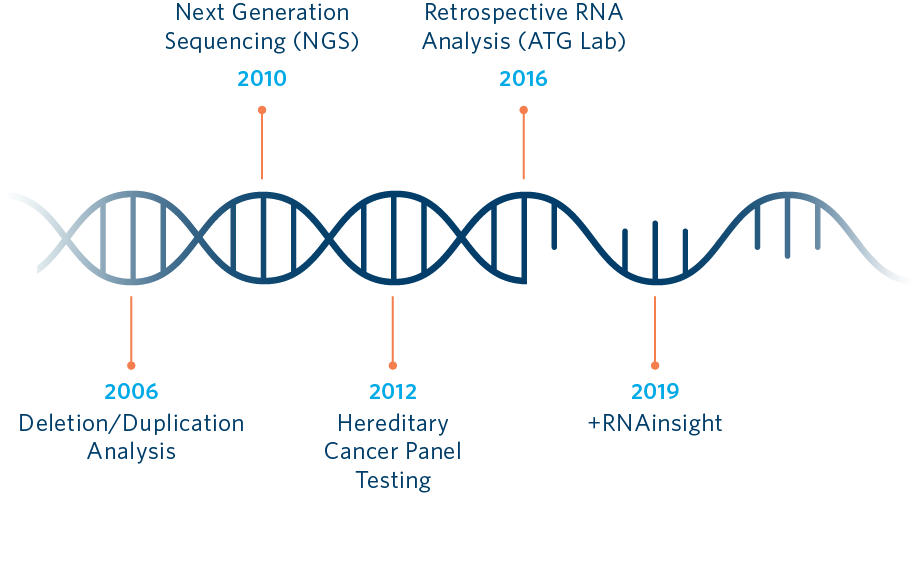
Limitations of DNA-Only Hereditary Cancer Testing


![rna_exon[1]](https://ambrygen.com/wp-content/uploads/2026/04/rna_exon1.png)
Finding Missed Hereditary Cancer Patients
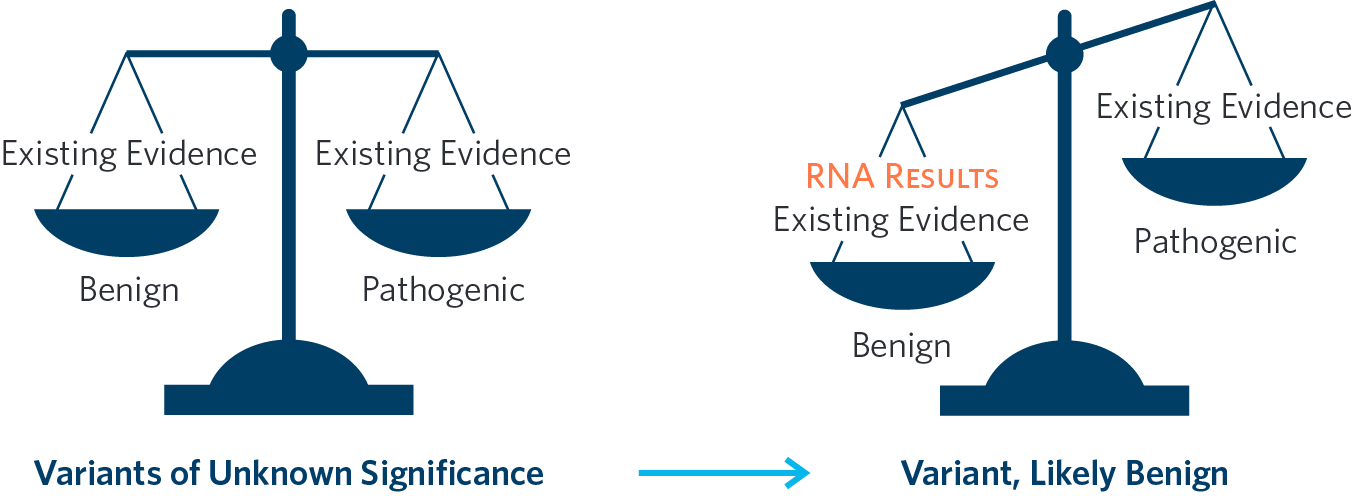
Minimizing VUS Results In Real Time
![rna-graph-v2-dec[1]](https://ambrygen.com/wp-content/uploads/2026/04/rna-graph-v2-dec1.svg)
Clarifying Results to Inform Patient Care

+RNAinsight® Product Overview
* +RNAinsight® is not available with BRCAplus® test. CustomNext-Cancer® can be used for single syndrome/single gene testing orders.
** Orders including +RNAinsight® are not eligible for STAT testing.
Available to order with hereditary cancer panels[*]
Reference Note
+RNAinsight® is not available with BRCAplus® test. CustomNext-Cancer® can be used for single syndrome/single gene testing orders.
Up to 90 Genes Analyzed by +RNAinsight®
AIP ALK APC ATM ATRIP AXIN2 BAP1 BARD1 BMPR1A BRCA1 BRCA2 BRIP1 CDC73 CDH1 CDK4 CDKN1B CDKN2A CEBPA CFTR CHEK2 CPA1 CTNNA1 CTRC DDX41 DICER1 EGFR EGLN1 EPCAM ETV6 FH FLCN GATA2 GREM1 HOXB13 KIF1B KIT LZTR1 MAX MBD4 MEN1 MET MITF MLH1 MLH3 MSH2 MSH3 MSH6 MUTYH NF1 NF2 NTHL1 PALB2 PALLD PDGFRA PHOX2B PMS2 POLD1 POLE POT1 PRKAR1A PRSS1 PTCH1 PTEN RAD51B RAD51C RAD51D RB1 RET RNF43 RPS20 RUNX1 SDHA SDHAF2 SDHB SDHC SDHD SMAD4 SMARCA4 SMARCB1 SMARCE1 SPINK1 STK11 SUFU TERT TMEM127 TP53 TSC1 TSC2 VHL WT1
5-14 day turnaround time (No increase due to +RNAinsight®) [**]
Reference Note
Orders including +RNAinsight® are not eligible for STAT testing.
Sample Requirements
One kit that includes 1 EDTA tube (DNA) and 1 PAXgene® tube (RNA)
Technical Details
Ribonucleic acid (RNA) is isolated from the patient’s specimen using standardized methodology and quantified. RNA is converted to complementary DNA (cDNA) by reverse transcriptase polymerase chain reaction (RT-PCR). Sequence enrichment of the targeted coding exons and adjacent intronic nucleotides is carried out by a bait-capture methodology using long biotinylated oligonucleotide probes followed by polymerase chain reaction (PCR) and Next-Generation sequencing. +RNAinsight® analyzes transcripts for up to 90 genes depending which Ambry Genetics DNA based Hereditary Cancer Panel it is paired with and depending on the absence or presence of RNA transcripts expressed in the blood. Any transcripts found are compared to a human reference pool. The absence or presence of RNA transcripts meeting quality thresholds is incorporated as evidence towards assessment and classification of DNA variants. Any regions not meeting RNA quality thresholds are excluded from analysis. The results from +RNAinsight® are used to provide functional RNA information to further support classification of DNA variants. It is not intended to be used as a stand-alone diagnostic test.
References
- Ambry Genetics, internal data on file
- Karam R. et al. RNA Genetic Testing in Hereditary Cancer Improves Variant Classification and Patient Management. ACMG 2019.
- Richards S. et al. Standards and guidelines for the interpretation of sequence variants: a joint consensus recommendation of the American College of Medical Genetics and Genomics and the Association for Molecular Pathology. Genet Med. 2015 May;17(5):405-24


![overlay-bottom[1]](https://ambrygen.com/wp-content/uploads/2026/02/overlay-bottom1.svg)