




Why choose GenomeNext?
Whole genome sequencing can provide a diagnosis for over 40% of patients on average. By analyzing exomic, intronic, and mitochondrial variants simultaneously, WGS creates an unparalleled opportunity to find answers earlier in the diagnostic journey.
Key capabilities
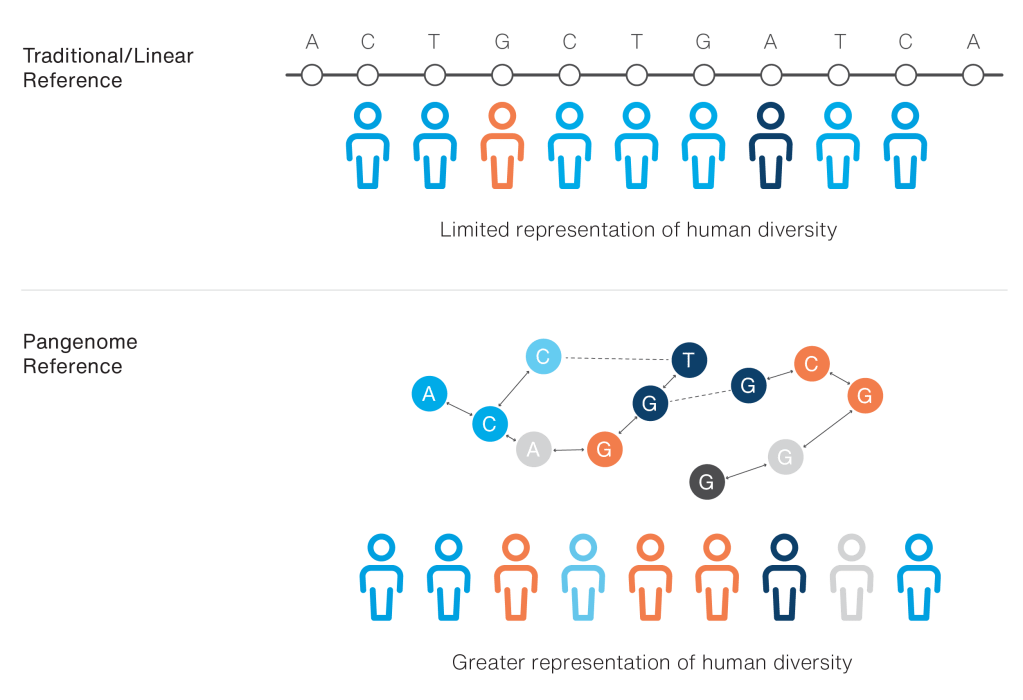
Reduced population bias
Using a pangenome-enabled reference reduces historical bias and significantly improves variant detection across diverse and underrepresented populations.
Functional RNA evidence
GenomeReveal™ adds supplemental RNA analysis to GenomeNext™ when clinically relevant variants requiring functional evidence are identified during genome analysis.

RNA analysis can provide additional insight into the impact of variants on:
- RNA splicing
- Gene expression
- Functional impact
By providing additional biological evidence, GenomeReveal™ may help improve confidence in variant interpretation.
Long-term value
Through Patient for Life™, results undergo continuous, lab-driven reanalysis to uncover new answers as genomic knowledge and gene-disease relationships evolve.
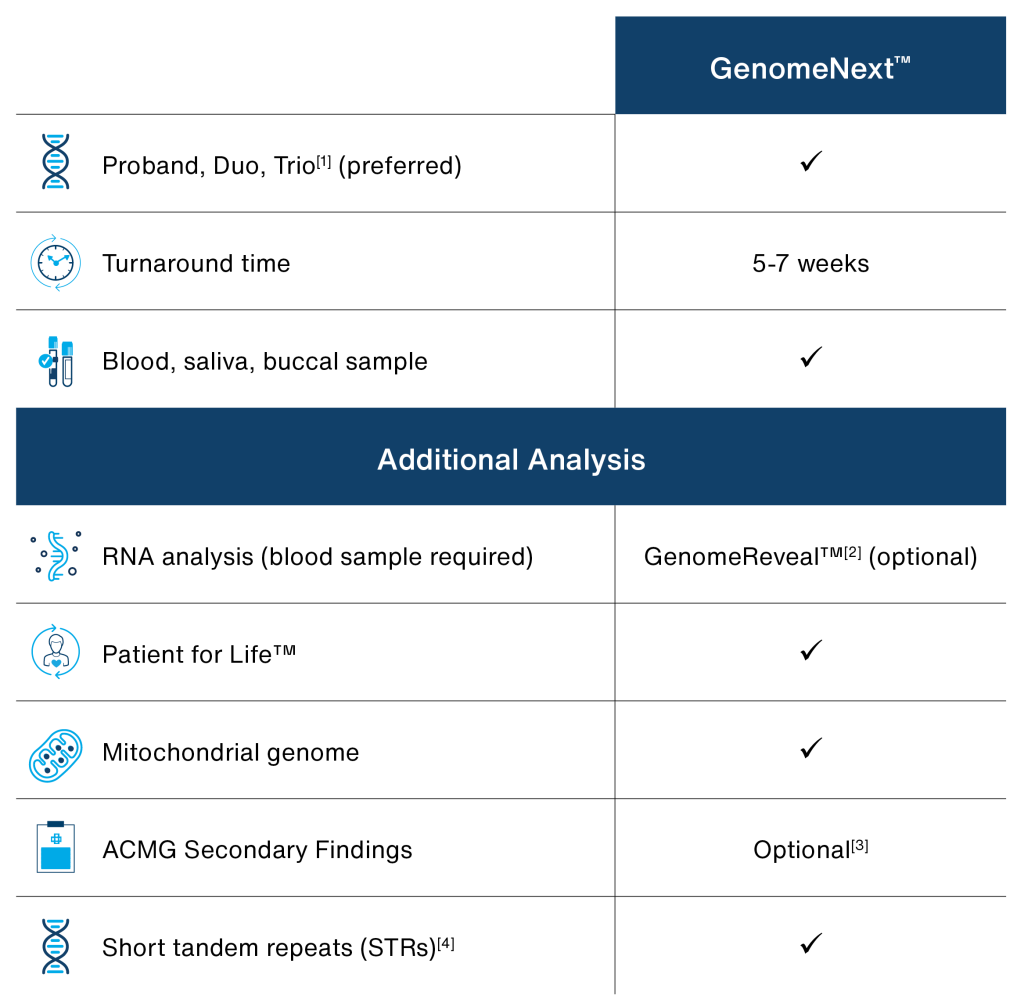
[1] Trio testing is recommended when biological relatives are available and consent to testing, as parental samples provide additional inheritance information to support interpretation. [2] Requires EDTA (DNA) and PAXgene (RNA) specimens. [3] Reports include option for ACMG-recommended secondary findings results, for all genome-sequenced individuals as part of the duo/trio. [4] GenomeNext™ currently includes analysis of select clinically relevant STR expansions, including Fragile X (FMR1), Myotonic Dystrophy Type 1 (DMPK), and Congenital Central Hypoventilation Syndrome (PHOX2B).


![overlay-bottom[1]](https://ambrygen.com/wp-content/uploads/2026/02/overlay-bottom1.svg)